This is a rule of thumb, not a precise deadline. Taste is personal, and plenty of people enjoy coffee well beyond a month. But there are good reasons for the timing.
Why very fresh coffee can taste worse
Roasting fills coffee with carbon dioxide, which it releases over the next days and weeks. This is called degassing. Fresh coffee gives off a lot of gas. When you brew it, the gas can disrupt extraction. In a pour-over it makes the coffee bloom and bubble unevenly. In espresso it can make shots unstable and sharp.
For this reason, many roasters rest coffee for several days before they sell it. We usually suggest:
- Espresso: wait about 5 to 10 days after roasting.
- Filter: about 3 to 7 days is often fine, and light roasts sometimes taste best after a week or two.
The roast date is printed on every bag we sell. Use it more than the best-before date, which is set well after the coffee has peaked.
Why old coffee tastes flat
After the gas has gone, oxygen starts to dull the flavours. The aromatics that give coffee its fruit and floral notes fade first, then the sweetness. Old coffee tastes flat, papery or stale. Heat, light and moisture speed it up.
Whole beans last much longer than ground coffee, because grinding exposes far more surface to the air. Ground coffee starts to fade within hours and tastes noticeably stale within a few days.
How to store it
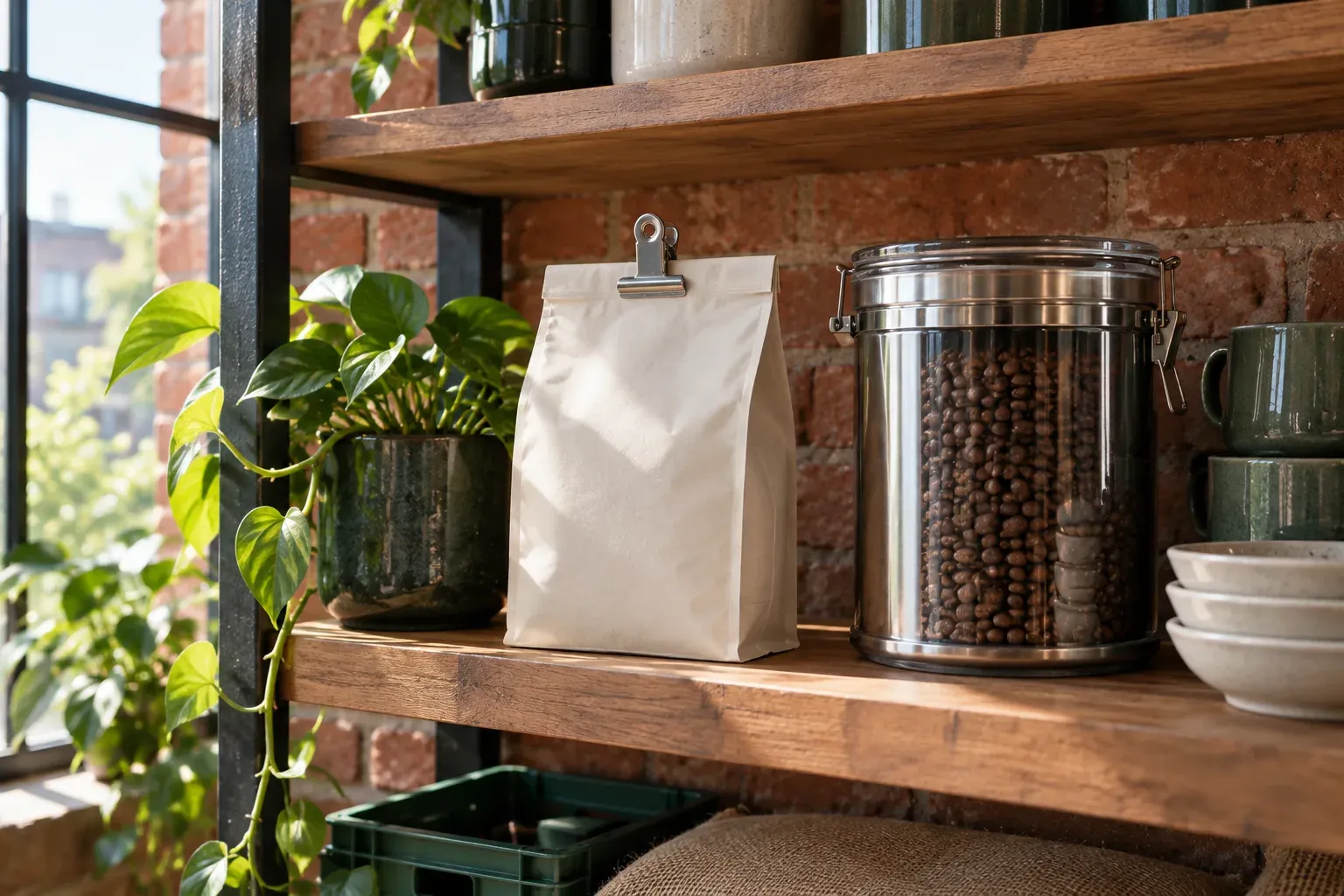
- Keep it airtight. Use the bag it came in, squeeze the air out and roll it down tightly, or move it to an airtight container. A bag with a one-way valve lets gas out but keeps most air out.
- Keep it cool and dark. A cupboard away from the stove and the kettle is good. A shelf in the sun is bad.
- Do not store it in the fridge. The fridge is damp, and it holds odours. Coffee absorbs them.
- Buy what you will use in a few weeks. If you drink 250 g a week, a 250 g bag is a good size.
- Grind just before you brew. This is the biggest freshness improvement you can make, and a hand grinder is a modest cost.
What about the freezer?
Some roasters and coffee professionals freeze coffee that they will not use for a long time. If you want to try it, divide the beans into small, airtight, single-use portions and freeze them once. Take a portion out and let it come to room temperature before opening, so that moisture does not condense on the beans. Do not return it to the freezer. For coffee you will drink within a month, you do not need to freeze it.
What to do with older beans
Old beans are not unsafe, they just taste less interesting. You can still use them:
- Grind finer, and brew hotter, to pull out what is left.
- Use them for cold brew, which is more forgiving and works well with older coffee.
- Use them in milk drinks, where the flavour is more muted anyway.
A simple routine
Buy a bag, check the roast date, wait a few days if you are making espresso, store it airtight and finish it within a month. Then buy another.