
How is coffee decaffeinated?
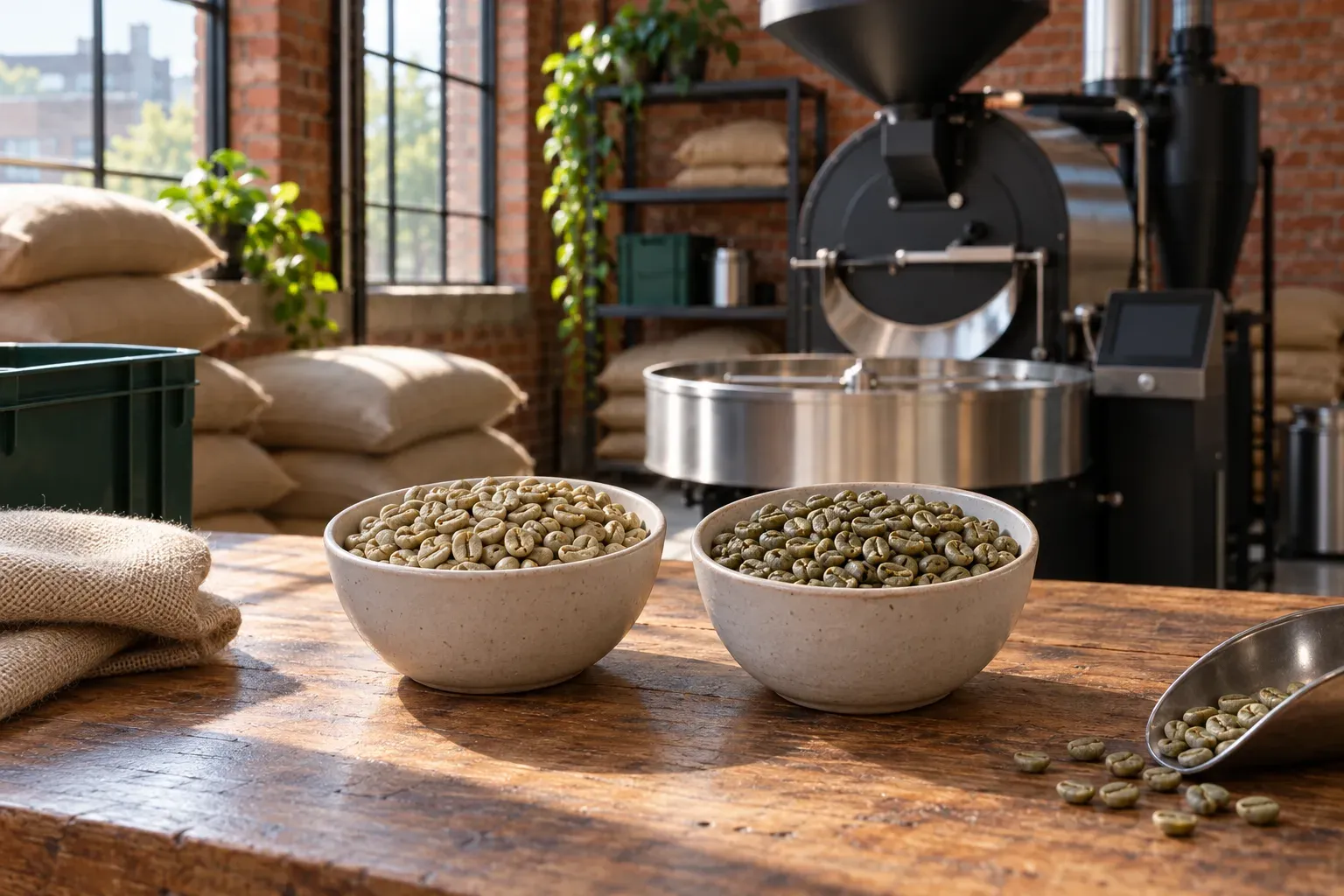
All the main methods work on green, unroasted coffee. The beans are soaked or steamed so they swell, then the caffeine is drawn out, and the beans are dried again. What differs is the thing that draws out the caffeine.
- Water and carbon (often called Swiss Water). The beans are soaked in water, and the caffeine is filtered out of the water with activated carbon. The water, which now holds the flavours of the coffee, is used to soak the next batch, so the beans lose caffeine but keep most of their flavour compounds.
- Carbon dioxide. Compressed carbon dioxide, in a state between gas and liquid, selectively removes caffeine from the soaked beans.
- Ethyl acetate. A solvent that occurs naturally in fruit and sugarcane. Producers in Colombia make it from fermented sugarcane, and this is often called the sugarcane process or "EA". Our Caldas Decaf is made this way.
- Methylene chloride. A solvent used by some producers. Strict limits apply to residues. We do not buy coffee made this way.
How much caffeine is left?
Not none. Decaf is usually described as having about 97 per cent or more of the caffeine removed, though the exact figure varies by process and coffee. As general guidance (the US Food and Drug Administration quotes figures like these), a 237 mL cup of regular brewed coffee has roughly 80 to 100 mg of caffeine, and a cup of decaf of the same size has roughly 2 to 15 mg. These are general figures, not measurements of Lowfield coffee, and they vary with the coffee, the decaf process and how it is brewed.
If you have been advised to limit caffeine, for example in pregnancy or because of a health condition, check with your doctor, midwife or pharmacist about how much decaf is suitable for you.
Does decaf taste different?
A little, but much less than it used to. Decaffeination softens some of the aromatic compounds and the beans can look darker after roasting. Good decaf has to start from good coffee: a decaf made from a poor coffee tastes like a poor coffee.
We have found the sugarcane process keeps sweetness well. Our Caldas Decaf tastes of brown sugar, hazelnut and milk chocolate, and it does well in milk drinks and as an espresso. It is not as bright as our washed coffees from Kenya or Ethiopia, and that is part of why we roast it to a medium level.
Tips for brewing decaf
- Treat it like a slightly different coffee. Decaf beans are often more porous and can extract faster, so for espresso try grinding a touch finer if the shot runs quickly.
- Use a recipe. The same recipe you use for your regular coffee is a good starting point.
- Check the roast date. Decaf stales like any other coffee.
Why would you choose decaf?
People choose decaf for many reasons: they want a coffee in the evening, they want to limit caffeine, or they simply like the flavour. It is also useful if you have a few cups a day and want to keep the habit with less caffeine.
Try it at a café
Ask for decaf on any espresso drink at any Lowfield café for 50 cents extra, or order a decaf filter at Collingwood or Richmond. You can also ask about wholesale decaf for your office or café.