
Roasters, buyers and producers use it to compare coffees fairly. At Lowfield we cup every new green coffee before we buy it, and every batch we roast before it goes on the shelf.
How a cupping works
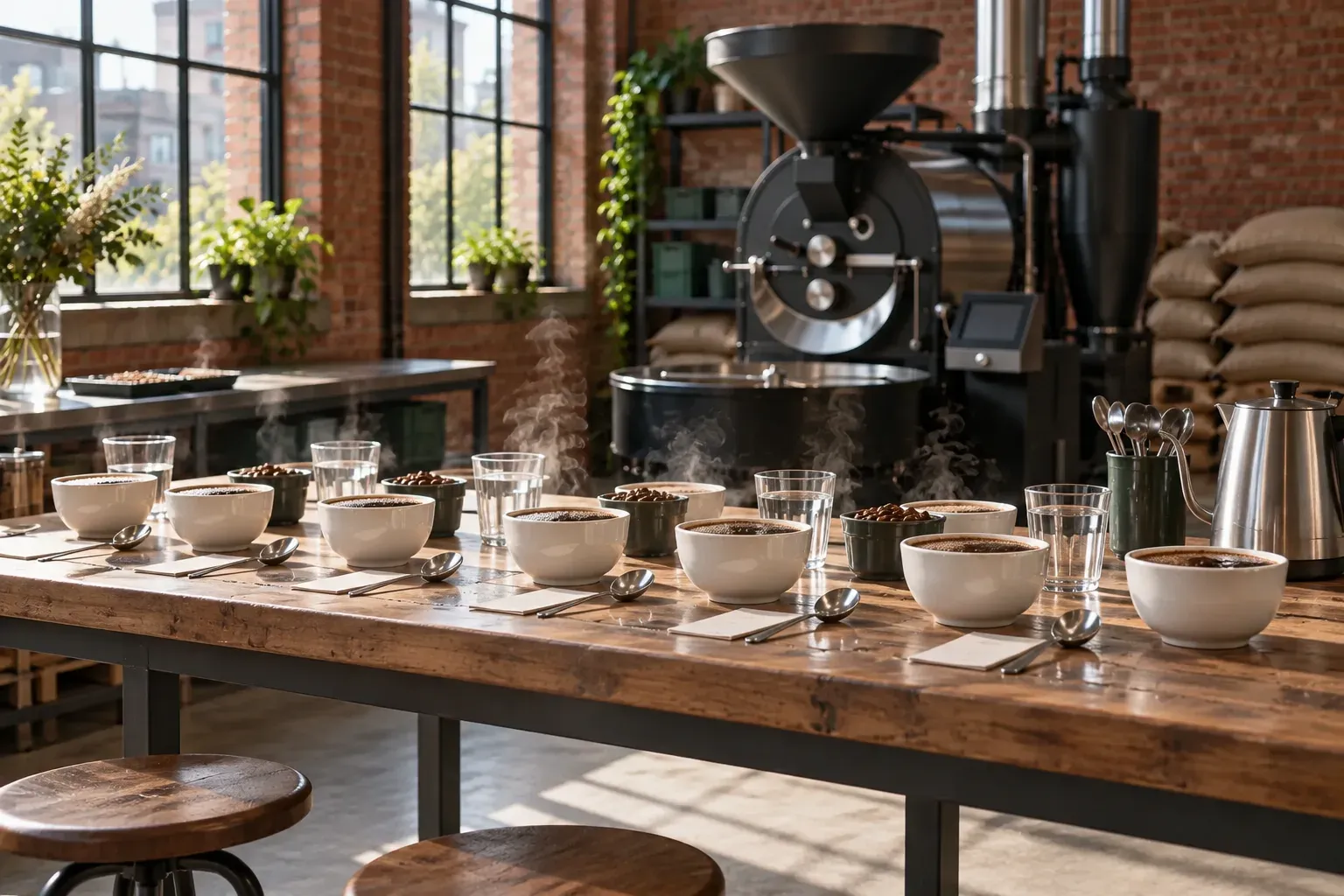
The method used in the specialty industry follows a published protocol from the Specialty Coffee Association. The details vary a little between tables, but the steps are the same.
1. Grind. The coffee is roasted lightly and ground just before cupping, fairly coarse, to the same setting for every cup. 2. Dose and water. Each cup gets the same weight of coffee, about 8.25 g for every 150 mL of water. The water is just off the boil, around 93°C. 3. Smell the dry grounds. Before the water goes on, you smell the coffee. This is the fragrance. 4. Steep for four minutes. The grounds float and form a crust on top of the water. 5. Break the crust. You push a spoon gently through the crust and lean in. This is the aroma, and it is when the smell is strongest. 6. Skim and wait. The grounds on top are lifted off with two spoons. The coffee cools for a few minutes. 7. Slurp. You taste by slurping the coffee off the spoon, loudly, to spray it over your whole tongue and push the aroma up to your nose. Then you go back to each cup as it cools, because flavours change with temperature.
Why slurp?
Most of what we call flavour is smell. A hard slurp pushes air and coffee vapour up the back of your nose. It looks silly, and everyone in a cupping room does it.
What the words mean
A cupping sheet scores or describes a set of qualities. These are the ones we talk about in class.
- Aroma and fragrance: what you smell before and after adding water.
- Flavour: the taste and smell together, for example "red apple" or "dark chocolate".
- Acidity: the sour or bright sensation in coffee, like the sharpness in an apple or a lemon. It can be pleasant and balanced; excessive sourness can taste sharp or unpleasant.
- Sweetness: the sugar-like quality. A sweeter coffee is usually better balanced.
- Body: the weight and texture in the mouth, from watery to syrupy.
- Aftertaste: what remains after you swallow.
- Balance: how well the parts fit together.
- Clean cup: the absence of off flavours.
What you can learn from one table
Cup three coffees side by side: a washed Colombian, a natural Ethiopian and a Brazilian natural. The Ethiopian will smell of berries and flowers. The Colombian will be rounder and sweeter, with a red apple edge. The Brazilian will be nutty and low in acidity. You are tasting origin, variety and process at the same time, and the cupping format lets you see them clearly.
Can I do it at home?
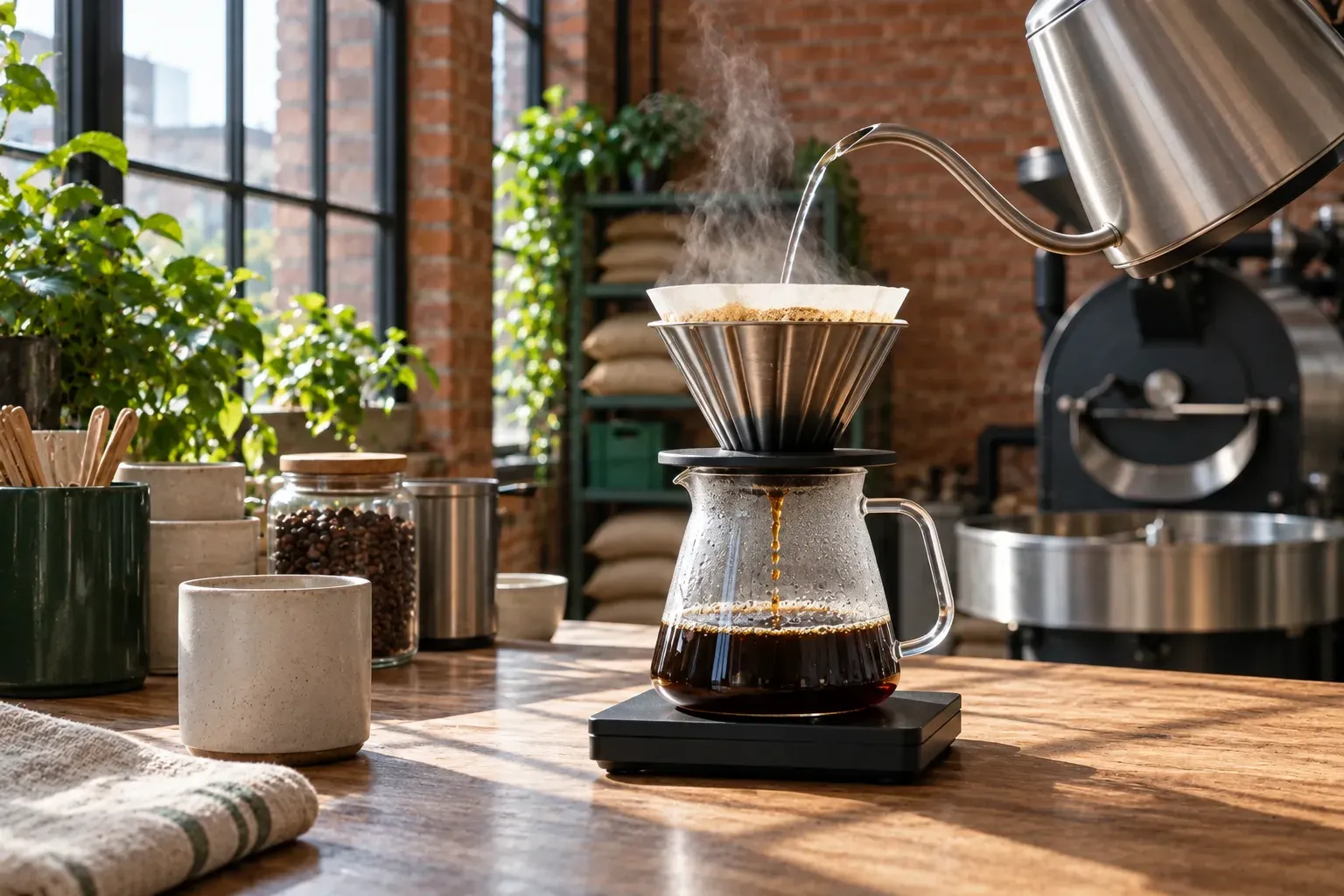
Yes. You need a few identical cups or glasses, a scale, a kettle, a spoon and a few coffees. Grind each coffee at the same setting, use the same weight and wait four minutes. Keep notes: even "sweet, a little sour, short finish" is useful. You will start to notice the differences in a few sessions.
Learn it with us
Our cupping class runs on Saturdays at 10:00 at the Lowfield Academy in Collingwood. You will taste eight coffees with an instructor, learn the vocabulary and take home a tasting notebook. It is open to beginners, and it costs $65 including GST. Read the details on the class page or ask us a question using the class enquiry form.